
AI Video Ad Maker for Small Business: Professional Ads Without an Agency
AI video ad maker for small business: ship 5-10 pro video ad variants in 40 minutes for under $100. Agency cost vs AI cost, 8 mistakes to avoid, FTC disclosure rules, and a 5-day launch plan for 2026.
A 30-second professional video ad used to cost a small business $15,000-$25,000 and 3-6 weeks of agency back-and-forth. In 2026 the same ad ships in 40 minutes for under $100. Small businesses are leading this shift, not lagging it — this is the playbook for shipping pro ads with an AI video ad maker for small business in 2026.

Agency vs. AI: The 2026 Economics, Side by Side
The cleanest way to see the shift is to put the two workflows on the same row. Medians, not best case — sources aggregated in Sources below.
| Agency / Studio | AI Video Ad Maker (2026) | |
|---|---|---|
| Cost per 30-sec ad | $15,000-$25,000 | $50-$120 (subscription + media) |
| Production timeline | 3-6 weeks | 40-90 minutes |
| Variants per brief | 1-2 (more = extra $$) | 5-10 in a single run |
| Revisions included | 1-2 rounds | Unlimited (it's text) |
| Aspect ratios delivered | 1 (16:9 master; reformats billed) | 9:16, 4:5, 1:1, 16:9 in one export |
| Iteration cost per winning ad | $4,000-$9,000 | $0-$15 |
| Brief to first impression | 25-45 days | Same day |
The row that matters most is iteration cost. Sovran's 2026 benchmarks show that 85-95% of tested ad creatives fail to outperform baseline. The only way to find a winner is volume — and AI is the first tool that gives small businesses the same creative volume big advertisers have had for a decade.
Why Small Businesses Are Leading the AI Video Shift
The conventional narrative — that small businesses are slow to adopt marketing tech — is wrong on video in 2026. The IAB's 2025 Video Ad Spend & Strategy Report found 86% of buyers are using or planning to use GenAI for video ad creative, and the Hedra analysis of IAB data shows 83% of ad executives had deployed AI in their creative process by January 2026 — up from 60% two years earlier. Smaller advertisers expect 45% of their videos to incorporate GenAI by end of 2026, ahead of the 40% industry average.
What's driving the SMB share is structural. Big brands have legacy vendor contracts and multi-stakeholder creative review boards. Small businesses have a credit card, a Meta Ads Manager login, and a deadline. The same AI tool that makes a 4-person e-commerce brand competitive with a 40-person brand team is the one a Fortune 500 marketing director is still waiting on legal to sign off on.
And the quality gap is gone. MindStudio's agency case study documented that brands using AI video saw 33% higher viewer retention and 20% better conversion rates than traditional shoots — at one-tenth the production time. HubSpot's 2026 marketing data shows short-form video (15-30s) is the highest-ROI content format for SMB lead generation, ahead of blog posts, podcasts, and gated PDFs.
From Product Photo to Published Ad in 40 Minutes
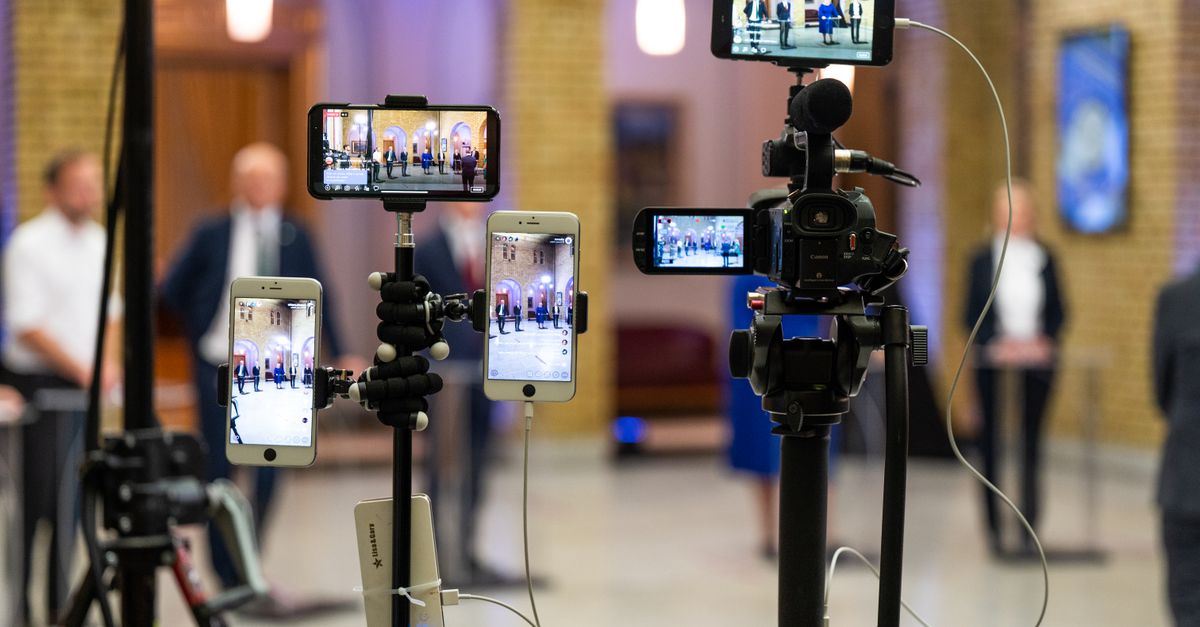
The end-to-end workflow, with the median time each step actually takes:
- Pick the offer and the platform (5 min). Single product, single audience, single platform (Meta, TikTok, YouTube Shorts). Don't optimize for "video in general" yet — pick the cheapest impression and the clearest conversion event first.
- Drop in your source asset (2 min). A product photo, a URL, a 30-second voice note describing the product, or a static shot of the founder. Gridvid, Creatify, Arcads, and InVideo all accept any of these.
- Generate 5-10 variants (10-15 min). A multi-agent pipeline produces script, voiceover, scene, music, and captions for each variant. Output: multiple full 15-30 second cuts in roughly the time it takes to make coffee.
- Review and pick the top 2-3 (10 min). Skim for hook quality, audio clarity, and on-brand visuals. Trust your judgment — you'll be killing losers in 48 hours anyway.
- Push to the ad platform (5 min). Upload, set a $20-$50/day test budget, let the platform's learning phase run 48-72 hours before judging performance.
- Kill losers, scale winners (weekly). The first batch is research, not the campaign. After week one, double down on the top quartile and ship the next 5-10 variants.
Compare that to the agency version: kickoff call, creative brief, treatment, script draft, casting call, shoot day, rough cut, two rounds of revisions, final cut, transcoding, launch — three to six weeks of calendar and a $15,000 invoice. The ae.studio SMB case study documented a small-business team going from concept to first shipped commercial in 40 minutes after previously spending 15 hours on the same task.
The multiplier is not speed alone. When creative is cheap, you can ship more creative — and 5-10 tested ad variants almost always beat 1 polished one. Per Sovran's benchmarks, only 5-10% of tested creatives become winners. AI gives small businesses the volume they couldn't afford before.
The 8 Most Common Mistakes Small Businesses Make With AI Video Ads

AI lowers the production floor; it doesn't replace judgment. ShortGenius's 2026 performance data and LNM's SMB campaign analysis cluster the recurring failures into eight patterns. Each is fixable; not fixing costs real money.
1. No clear hook in the first 3 seconds
Skippable ads on Meta, TikTok, and YouTube Shorts have a 3-second window before drop-off accelerates. Generic AI intros — slow product pans, "Hi, I'm so excited to introduce..." voiceovers — burn the budget before the value prop lands. Lead with a pattern-interrupt, a benefit statement, or a bold text overlay in the opening frame.
2. AI voiceover that doesn't match the brand
ElevenLabs and similar tools offer hundreds of stock voices, but most are generic. Influencer-led brands that swapped a real founder's voice for an AI voice have seen CTRs plummet 40-60% because the personality that drew the audience was erased. License a distinctive voice; don't accept the default "neutral narrator."
3. Vague lifestyle content instead of product-in-action
D2C brands that shipped generic AI lifestyle content — abstract sunsets, smiling people, vague aspirational text — saw conversion rates drop 60-70% versus ads showing the product doing the thing it does. The viewer needs to see the product solve the problem within the first 5 seconds.
4. Shipping a single "hero" ad with no test variants
Per Sovran's benchmarks, 85-95% of tested ad creatives fail to outperform baseline. A single AI ad is a coin flip. Generate 5-10 variations on hook, voiceover, and CTA; let the platform's learning phase pick the winner.
5. Forgetting captions and text overlays
85% of Meta video views are on mobile with sound off. An ad that relies on voiceover to deliver the benefit is a wasted impression. Burn captions and a benefit text overlay into the cut from the start.
6. Wrong aspect ratio for the platform
TikTok and Reels are 9:16. YouTube Shorts is 9:16. In-feed Meta is 4:5 or 1:1. CTV is 16:9. A 16:9 ad pushed to TikTok with letterboxing is a brand-safety risk. Generate per-platform, not once-and-done.
7. No clear CTA
"Learn more" is not a CTA. "Shop the launch — 20% off this week" is. Every AI ad should have one — and only one — primary action the viewer is being asked to take.
8. No disclosure that the ad uses AI
This one has legal teeth. See below.
FTC AI Disclosure: The Rule That Trips Up Small Businesses
The FTC's 2026 enforcement posture on AI-generated content has shifted from "guidance" to "active cases." Enforcement actions rose 40% in 2025 vs 2024, and the focus is squarely on digital and social media advertising. The legal definition of "substantially generated" — content where AI tools produced more than 50% of the text, created the visual elements, or made material changes to the meaning or tone — triggers disclosure obligations.
Practical checklist for a small business running an AI-produced video ad:
- Synthetic people, voices, or scenes that a viewer could mistake for real (spokespersons, deepfake-style testimonials, fictional founders) — disclose. "AI-generated" or "Created with AI" in the caption or a small overlay.
- AI-assisted but real — e.g., a real founder's voice over AI-edited B-roll — disclosure is generally not required, but a passing mention in the description is good practice and brand-safe.
- EU exposure: Under the AI Act, fines for non-compliance run up to €15 million or 3% of global annual turnover, per Dynamis LLP's compliance summary. Even a US-based SMB selling into Europe is in scope.
Rule of thumb: If the AI made a person, a voice, or a claim that looks real, disclose. If the AI edited real footage of a real product, you're fine without disclosure. When in doubt, say so — once, clearly, in plain English.
What to Look for in an AI Video Ad Maker
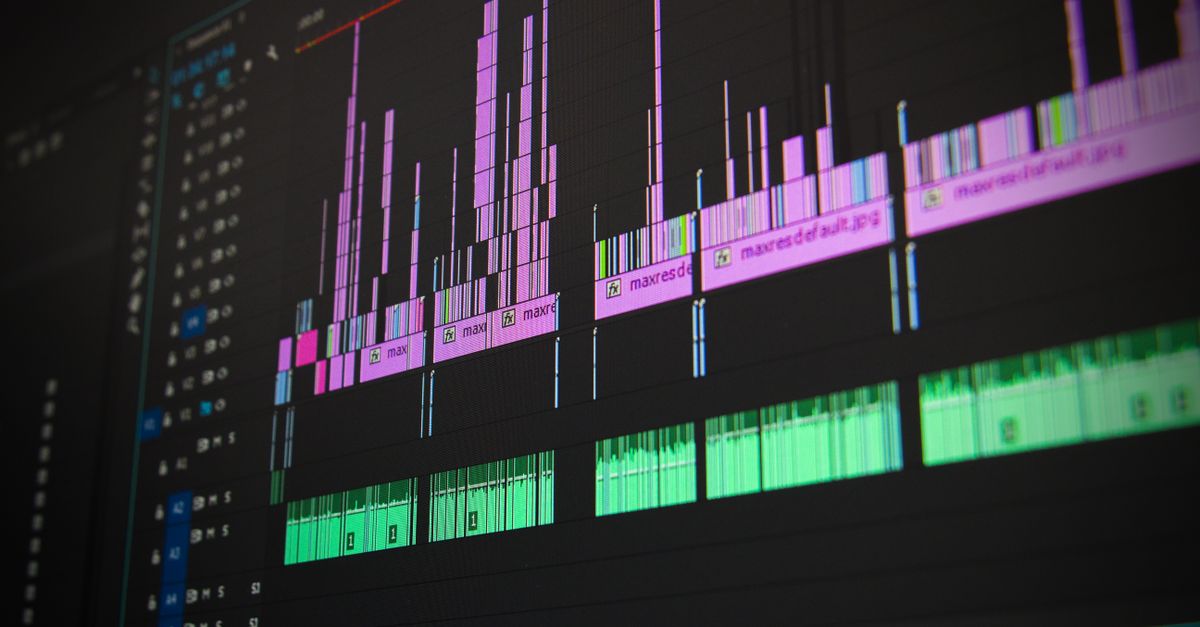
Not every AI video tool is built for ads. Digital Applied's 2026 agency pricing data shows three things separate an ad-focused tool from a general-purpose video generator:
Gridvid was built specifically for ad teams — a 7-agent pipeline that handles script, voice, scene, music, captions, and QA in one workflow, with native publishing to Meta, TikTok, and YouTube Shorts. General-purpose video tools (HeyGen, Synthesia, Runway) can produce ads but you'll spend more time on post-production assembly. Creatify sits in the middle — strong on batch generation from URLs, lighter on campaign-side infrastructure.
Pricing for SMB-friendly tools in 2026 runs $19 to $49/month for the entry tier (Gridvid Starter, InVideo, Creatify Starter), with usage-based credits on top. The agency alternative for a single 30-second ad still costs $2,000-$15,000 — so the AI tool pays for itself the first time you ship an ad.
How to Ship Your First AI Video Ad This Week
The fastest path from zero to shipped ad for a small business in 2026:
- Day 1: Pick one product and one platform. Pull the highest-performing static creative you already have (a product photo, a testimonial screenshot, a hero image). This becomes your source asset.
- Day 1-2: Sign up for an ad-focused AI video tool with a free or low-cost trial. Generate 5-10 variants with different hooks, voiceovers, and CTAs.
- Day 2-3: Pick the top 2-3, burn captions and a benefit text overlay into each cut. Verify aspect ratio matches the platform. Add an AI-disclosure overlay if you used synthetic people or voices.
- Day 3-5: Push to the ad platform with a $20-$50/day test budget and a clear conversion event (purchase, lead form submit, add-to-cart). Let the learning phase run 48-72 hours before judging.
- Day 5-7: Kill the losers, scale the winners 2-3x, and ship the next batch. Iterate weekly. Per Wyzowl's 2026 video marketing data, marketers who ship video weekly report 2.3x the ROI of those who ship monthly.
End of week one: ~$100 in tool spend, ~$200-$350 in media, and 5-10 ads in market that previously would have cost $15,000+ and 3-6 weeks. That's the 2026 video ad economics for small businesses — and it's why your competitors are already shipping.
Ship your first 5 AI video ad variants this week.
Gridvid's 7-agent pipeline turns a product photo and a one-line brief into 5-10 platform-ready ad cuts in under an hour — including voiceover, captions, music, and the 4 aspect ratios Meta, TikTok, and YouTube Shorts all want. Starter plan is $19/month, and your first ad covers the year's subscription.
Try Gridvid free →No credit card required. Ship 5 variants in 40 minutes or your first month is free.
Sources & Further Reading
- IAB — Nearly 90% of Advertisers will Use Gen AI to Build Video Ads
- eMarketer — Nearly 40% of video ads will use genAI by 2026, says IAB
- IAB — U.S. Digital Video Ad Spend to Surpass $80B in 2026
- Sovran — Video Ad Production Cost in 2026 Pricing Benchmarks
- GreenFrog Labs — 30 Second Commercial Cost: Full Pricing Breakdown (2026)
- MindStudio — How a Marketing Agency Scaled Video Production 10x with AI
- ae.studio — AI Video Ad Production: From Concept to Commercial in Hours
- Wyzowl — Video Marketing Statistics 2026
- HubSpot — 2026 Marketing Statistics, Trends, & Data
- Digital Applied — Facebook Ads Benchmarks 2026: CPC, CPM, CTR by Industry
- Digital Applied — Social Media Ad ROI 2026: Platform Comparison
- Hedra — AI Generated Advertising: How to Create, Scale, and Optimize AI Ads in 2026
- ShortGenius — 8 Common Mistakes With AI Generated Video Ads
- LNM — Common AI Marketing Mistakes That Small Businesses Make
- HumanAdsAI — FTC AI-Generated Content Disclosure: 2026 Rules Explained
- Dynamis LLP — AI Disclosure Rules 2026: What Brands & Influencers Must Do
- Digital Applied — Digital Marketing Pricing 2026: What Agencies Charge
Image Credits
- Hero: Pexels #10376250 by RDNE Stock project
- Production camera: Pexels #9622793 by Wisam Alazawi
- Cost comparison: Pexels #7580854 by RDNE Stock project
- Editing interface: Pexels #257904 by Pixabay
Last updated: June 15, 2026 · Written by the Gridvid Team
Share


