
AI UGC Video Ads: Script, Cast and Generate Without Creators
AI UGC video ads keep the phone-camera look without $500-$1,200 creator fees. What avatars can and cannot fake, cost math, script anatomy, and a 7-day sprint to a working bench.

The performance verdict on UGC-style creative is settled. Creator-style ads on Meta posted a 1.88% click-through rate against 1.41% for polished creative in Benly's 2026 dataset. On TikTok the gap widens: UGC-style ads run 1.4–2.3% CTR versus 0.7–1.2% for polished brand ads, with cost per click 45–55% lower. And the trust numbers underneath are blunt: 80% of consumers trust UGC over traditional ads, and UGC drives 10.38x higher conversions than brand-created posts.
The problem is supply. Professional UGC creators charge $200 to $3,000 per piece, with a median of $500–$1,200 per video — and a serious testing program needs volume that multiplies fast. AI UGC video ads attack exactly that constraint: the same vertical, phone-lit, testimonial-tone format, generated from a script with a castable AI avatar — no shoot, no negotiations, no revision rounds. The Interactive Advertising Bureau found 86% of advertisers already use or plan to use generative AI for video ad creative, with buyers projecting AI-made creative will be roughly 40% of all video ads by 2026. This is now a standard production lane, not an experiment.
Here is how the format works, what it costs against a real-creator bench, where it still fails, and the afternoon workflow to ship your first batch.
What AI UGC Video Ads Are
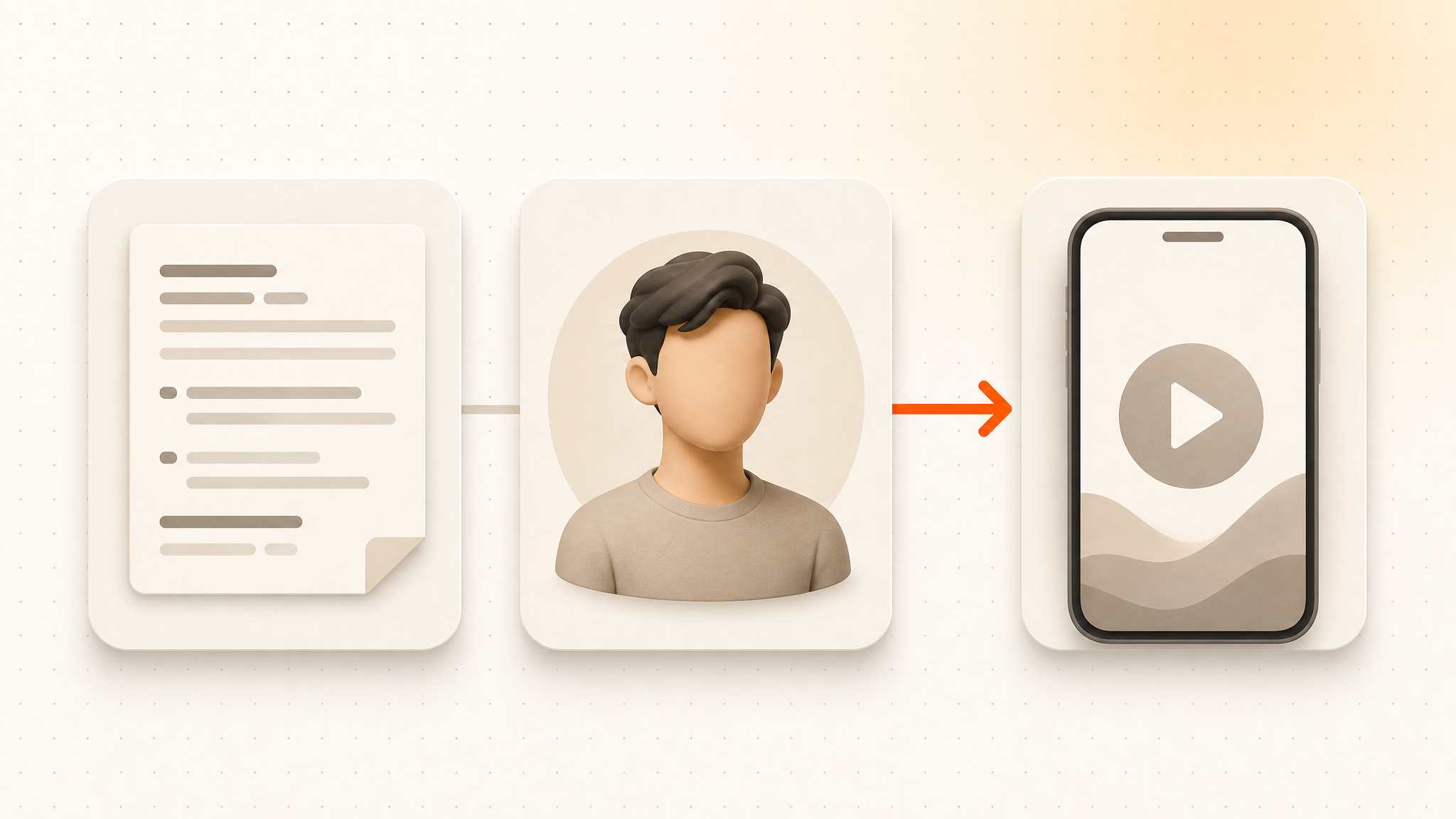
An AI UGC ad is a vertical video that looks like a creator made it — hand-held energy, direct-to-camera address, natural speech — but is generated: the avatar is synthetic, the voice is cloned or synthetic, the script is yours. The production chain has three links:
- Script. A 60–90 word conversational monologue: hook in the first 2 seconds, one pain point, one product truth, one CTA. Written like someone talks, not like ad copy.
- Cast. An AI avatar matched to the audience — age, vibe, setting (car, kitchen counter, desk, bedroom). Modern platforms carry 1,100+ avatars with lip-sync measured in hundredths of a second, and the strongest competitors ship 300–1,500+ faces at $39–$110 per month.
- Generate. The platform renders speech with synced lips, adds captions, and exports platform-ready verticals. Batch mode turns one script into 5–10 avatar versions for testing.
The category's economics live in that last link: batch generation means every new variation costs minutes, not a new negotiation. Our Creatify vs HeyGen vs Gridvid comparison breaks down the tooling layer; this article stays on the strategy and the math.
HubSpot's State of Marketing 2026 found 79% of marketers who tested UGC against studio creative report higher engagement for UGC — and the majority of ads still running after 30+ days in DTC categories are phone-camera UGC, not studio production.
The Creator Cost Math — and the AI Alternative
Build a realistic testing bench: 8 fresh UGC-style videos per month, plus 3 variants per winner for scaling.
| Supply path | Unit cost | 8 videos/month | Turnaround per video |
|---|---|---|---|
| Professional UGC creator (median) | $500–$1,200 per video | $4,000–$9,600 | 3–7 days |
| Budget creator tier | $150–$300 per video | $1,200–$2,400 | 2–5 days |
| Marketplace minimums | $200–$500 per video (80% of quotes under $500) | $1,600–$4,000 | 2–7 days |
| AI avatar generation | $39–$110/month subscription | $39–$110 flat | Minutes per video |
Rate sources: JoinBrands' 2026 rate guide and Influencer Marketing Hub's benchmark (80% of creator quotes under $500/video). The AI row is the same step-function the rest of this blog series keeps finding — and it compounds, because variant cost is near zero. An 8-video bench with 3 variants each is 24 renders: with real creators that is a $12,000–$28,800 month; with AI it is the same subscription either way.
Key takeaway. AI UGC does not replace your best creator relationships — it replaces the floor of the pipeline: the volume testing tier where paying human rates for 24 variants a month is economically impossible. Use creators for hero content; use AI for the testing bench that finds what deserves hero content.
Why This Format Wins: The Benchmarks
The reason UGC-style creative outperforms polished ads is structural, not aesthetic: platforms optimize for watch time and engagement velocity, and a phone-filmed vertical looks like every other piece of content in the feed — so it gets watched instead of skipped. The measured gaps:
| Metric (TikTok) | UGC-style ads | Polished brand ads | UGC advantage |
|---|---|---|---|
| 3-second view rate | 42–55% | 22–34% | +60–80% |
| Click-through rate | 1.4–2.3% | 0.7–1.2% | +90–100% |
| Cost per click | $0.45–$0.80 | $0.90–$1.60 | −45–55% |
| Through-play rate (15s) | 18–26% | 9–15% | +70–80% |
| Ad recall lift | 22–27% | 15–19% | +40–50% |
Dataset from Stackmatix's 2026 TikTok UGC analysis; the pattern replicates across Meta and DTC verticals, and ads featuring UGC achieve 4x higher CTR than ads without UGC across placements. If your current feed is all polished product spots, that table is the arbitrage you are leaving on the table. Teams running this style should pair it with structured creative testing so the format advantage converts into a learning advantage.
First AI UGC Ad in One Afternoon
The hour-by-hour session for batch one. Total time: about four hours, most of it waiting on renders.
Hour 1 — Write three scripts
One pain-first, one result-first, one unboxing/natural-use. 60–90 words each, written the way your customer talks — contractions, one idea per sentence, product named once. The hook must land inside two seconds: "I stopped buying X because…" beats "Introducing…"
Hour 2 — Cast the avatars
Pick 2–3 avatars that plausibly match your buyer: same age band, same setting your audience films from. Avoid the uncanny tier — glossy studio avatars read as ads. Generate one 15-second test render per avatar before committing; check lip-sync on the first sentence and hand gestures.
Hour 3 — Generate the batch
Render the 3 scripts × 2–3 avatars grid — six to nine videos. Add captions (short lines, high contrast), keep the product shot b-roll between avatar segments if the tool supports product inserts.
Hour 4 — Ship the test
Review on a phone, not a monitor — this format lives on phones. Kill anything that feels like an ad, launch the rest as a CTR test at 10% budget with kill criteria set (below). Your first AI UGC bench is live.
Seven-Day Sprint: From Zero to a Working AI UGC Bench
Run this once, then the bench runs itself on a weekly rhythm.
- Day 1: The four-hour afternoon above. Six to nine AI UGC videos rendered, 3–6 launched.
- Day 2: Set the measurement frame: 1,000 impressions per ad minimum before judging; pause below 1.0% CTR; track 3-second view rate as the hook metric — it is the biggest UGC lever per the table above.
- Day 3: Read early hooks. Any avatar/script combo under 30% 3-second view rate is dead; note what the survivors share.
- Day 4: Generate variants of the best hook — same script, new avatar; same avatar, new first line. AI makes variant cost ~zero; use it.
- Day 5: Launch variant wave two. Retire wave-one losers. Keep total live ads in the 6–10 band per ad set for clean reads.
- Day 6: Let it run. Do not edit. Frequency above 3.0 on cold audiences means creative rotation is due — rotate scenes first, scripts second.
- Day 7: Full read: which script angle won, which avatar carried it, cost per click vs your polished baseline. Write the one-pager. Next week's batch is now a copy-paste of a winning pattern, not a brainstorm.
By day 7 you have a tested, measurable AI UGC bench — for a subscription fee — and a documented pattern explaining your audience's response. The same sprint logic scales to full campaigns, as in our guide to making video ads with AI.
Script Anatomy: What Goes in Those 60–90 Words
Batch one lives or dies on the scripts, so here is the tested structure line by line:
- Seconds 0–2, the hook: first-person, present tense, pain or surprise. "I stopped buying fabric softener because of this" — not "Today I want to talk about…" Name nothing yet; curiosity does the work.
- Seconds 2–8, the relatable problem: one specific frustration the product removes. Specificity is the UGC register: "my gym bag smelled like a locker" beats "my clothes had odor issues."
- Seconds 8–18, the product truth: one claim, one mechanism, product shown on screen. This is where your b-roll inserts under the avatar's voice.
- Seconds 18–25, the proof or comparison: "three weeks in, still fresh." Cheap credibility — a number, a duration, or a before/after of usage, not of faces.
- Seconds 25–30, the CTA: conversational and single. "It's like thirty bucks — link's there." No triple-CTA; one ask per ad.
Keep contractions. Read it aloud; if a sentence needs a breath to finish, cut it in half. And write all three scripts in one sitting — the voices must match across the batch, because avatar consistency is part of what the test measures.
Three Mistakes Teams Make With AI UGC
- Ad-voice scripts on a UGC face. The format's contract with the viewer is "peer, not brand." A polished script on a casual face breaks the contract and reads as deception. If the copy sounds like a commercial, rewrite it until it sounds like a text message.
- One avatar, five scripts. The sameness trap works vertically too: audiences tire of the face before the message. Two to three avatars per batch, rotated monthly, keeps the bench fresh.
- No baseline comparison. Launching AI UGC in a vacuum tells you nothing — run it against your best polished ad in the same window, same audience. The read you want is the delta against what you already run.
Where AI UGC Ads Still Fail (2026)
- High-trust categories resist avatars. Health, finance, and anything where the speaker's credibility is the product: audiences discount synthetic presenters, and the AI-vs-real-creator gap is smallest in exactly these verticals. Test carefully before scaling.
- Hands, holds, and reveals. Avatars talk well but interact poorly with products. The fix is structure: avatar for testimony, real product b-roll for demonstration, cut together.
- Platform disclosure rules. Meta and TikTok require labeling AI-generated realistic content in some categories, and enforcement is tightening. Bake disclosure into your template — it has not been shown to hurt performance materially, while non-disclosure risk absolutely can.
- The sameness trap. Popular avatars appear in thousands of ads. If your audience scrolls past the same face weekly, your CTR decays. Rotate avatars monthly the way you rotate creative weekly.
The Bottom Line
The UGC format won; the creator pipeline did not scale to meet it. At $500–$1,200 per human video, a testing bench that ships 20+ variants a month is out of reach for most budgets — at $39–$110 per month for AI generation, it is an afternoon. The winning structure in 2026 is hybrid: real creators for hero trust content, AI UGC for the volume testing that finds the heroes. Start with one afternoon, three scripts, two avatars. Let the CTR data argue the rest.
Frequently Asked Questions
Are AI UGC ads allowed on Meta and TikTok?
Yes, with disclosure. Both platforms require labeling for AI-generated realistic people in advertising contexts, and both still run synthetic-creator ads at scale — the IAB's 86% adoption figure includes them. The risk is non-disclosure, not the technology.
Do AI UGC ads actually convert, or just get views?
They convert when the message is real. The format earns the view (phone-native look, high 3-second rates); the script earns the click. Benchmarks put AI-assisted UGC in the same conversion bands as creator content for visually verifiable products — the gap appears where trust must be earned by a human face, as covered in the limits above.
Should I keep paying human creators at all?
Yes — for hero content. The AI tier is for testing volume and iteration speed; human creators still win on authenticity, product interaction, and usage-rights-clean hero assets. The hybrid split: AI finds the pattern, humans make the pattern premium.
How long should an AI UGC ad be?
15–30 seconds for paid placements. Long enough for hook-pain-proof-CTA, short enough to hold a 40%+ through-play rate. On TikTok, cut a 15-second version of every 30-second script — the same logic as the AI video ad generator playbook.
What about the product shots inside the ad?
Use real footage for the product and synthetic presenters for the testimony. A pack shot filmed on your phone — ten seconds, natural light, hand turning the package — inserts under the avatar's proof segment and anchors the claim. Hybrid ads test better than fully synthetic ones because the product evidence is verifiable while the reaction stays relatable.
Generate your first AI UGC ad today
Start with 50 free credits — that's 5 full product demo videos, zero cost.
Start free →No credit card required. Three scripts and two avatars are all batch one needs.
Benchmarks and rates cited from 2026 published sources: Modliflex/Benly, Stackmatix, Buzzinly, JoinBrands, Influencer Marketing Hub (via Conbersa), Archive, HubSpot/Adlibrary, Fliki/IAB, and HeyGen. Verify current rates before contracting creators.
Share


